
Architectural Discipline in B2B Commerce Integrations
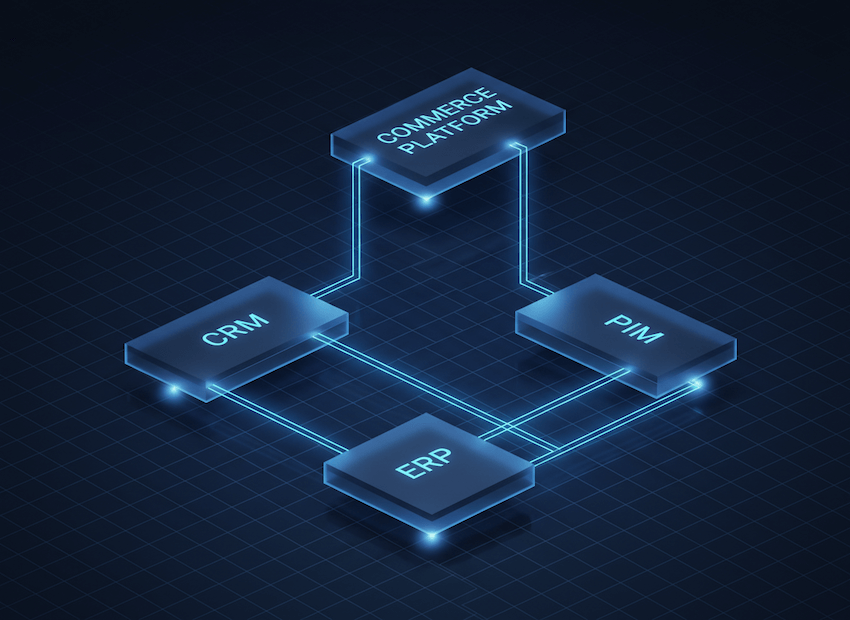
In B2B commerce environments, integrations define capability.
Pricing logic connects to ERP. Inventory synchronises with warehouse systems. Customer data flows between finance, CRM and commerce. The platform is rarely isolated.
When integration strategy lacks discipline, structural risk increases.
Integration decisions are therefore architectural decisions.
Extensions Solve Problems but Introduce Dependency
Third-party modules often provide rapid solutions to immediate requirements. A pricing rule is implemented. A workflow is simplified. A feature gap is addressed.
Each addition appears incremental.
Over time, extension dependency deepens. Version compatibility narrows. Upgrade paths become constrained. Troubleshooting becomes layered.
The platform becomes dependent not only on internal architecture, but on external release cycles.
Custom Development Requires Structural Clarity
Custom functionality offers control. It can align precisely with operational workflows and commercial models.
However, poorly governed custom development introduces similar fragility. Overlapping logic, undocumented dependencies and inconsistent coding standards increase upgrade risk.
Customisation without architectural oversight shifts complexity rather than reducing it.
The distinction is not between extension and custom. It is between structured and unstructured implementation.
Integration Stability Determines Operational Confidence
In B2B commerce environments, integration reliability influences daily operations.
Delayed stock updates affect ordering decisions. Pricing discrepancies generate manual correction. Customer account data misalignment increases support overhead.
When integrations are stable and predictable, operational friction reduces.
When they are brittle, teams compensate with manual validation and exception handling.
Architecture Influences Upgrade Viability
Integration complexity directly affects upgrade resilience.
Fragmented logic and excessive dependency increase the cost and risk of platform evolution. Necessary upgrades are deferred. Security patches become cautious. Technical debt accumulates.
Architectural discipline ensures that integrations remain traceable, modular and manageable.
Without it, renewal becomes disruptive rather than controlled.
Governance Enables Sustainable Expansion
As B2B organisations grow, new integrations become necessary. Additional suppliers, new pricing models and expanded data requirements increase complexity.
When architectural principles are defined early, expansion is structured.
New capability is layered without destabilising the foundation.
The objective is not minimal integration. It is controlled integration.

Continue Reading
Our Approach to Structured B2B Commerce
If your platform feels constrained by technical debt, operational friction or architectural complexity, the next step is not immediate change. It is clarity.
Our approach sets out how complex B2B commerce environments are assessed, stabilised and evolved with architectural discipline and risk control. It explains the framework behind long-term platform performance.
Understanding the structure behind the work is often more important than the work itself.
View Our Approach